Accessories
Sleeves and toploaders for One Piece cards: the right formats
· 5 min read
One Piece cards use the standard 63 × 88 mm size. The whole protection ecosystem follows: perfect fit, standard sleeves, toploader, semi-rigid.
One Piece Card Game cards use the standard trading card size: roughly 63 × 88 mm. It is the same template as most common TCGs, which makes nearly every protection product on the market compatible. The choice is therefore not about compatibility, but about use.
The three protection levels
Perfect fit (about 64 × 89 mm)
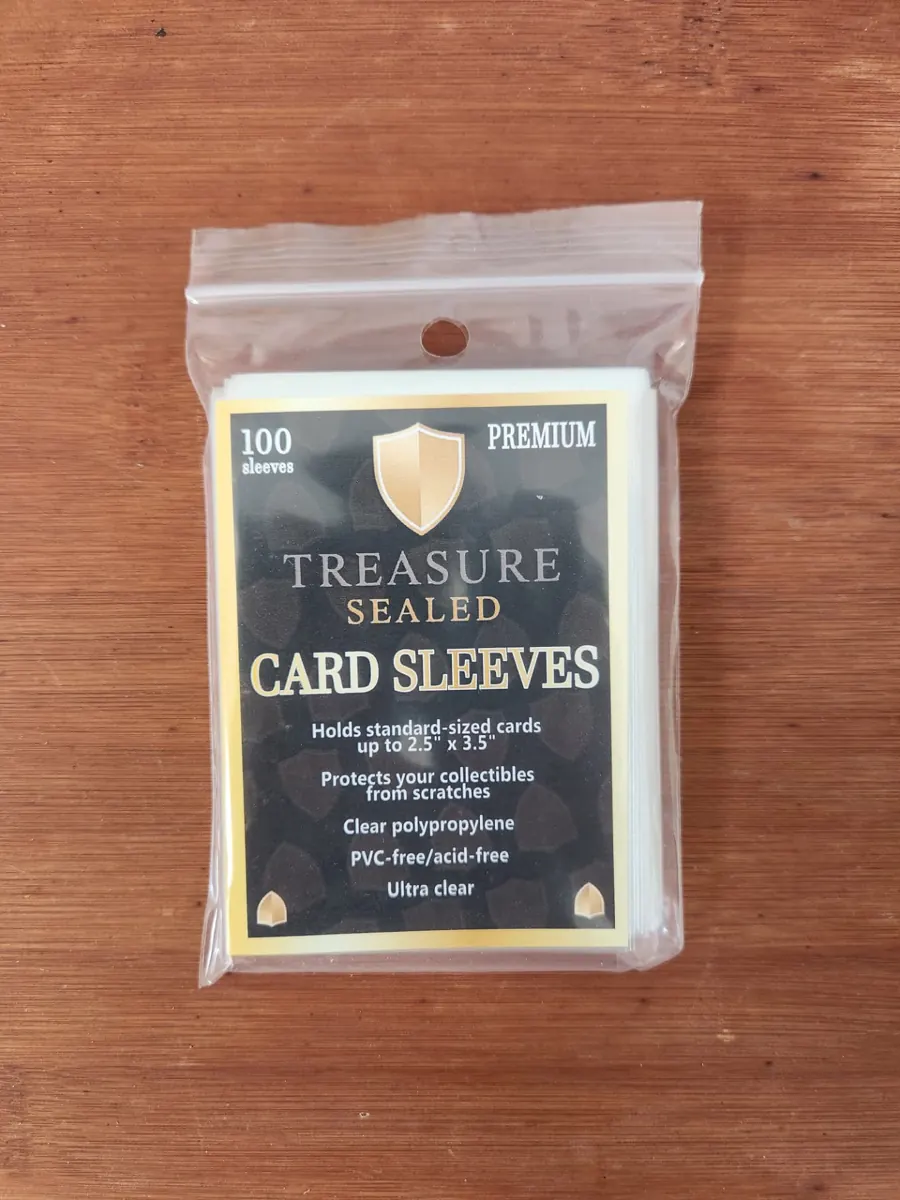
A thin, close-fitting sleeve placed directly against the card. Used alone, it protects from dust and binder friction. Used as a first layer under a standard sleeve — known as double sleeving — it closes the top opening and limits dust and humidity ingress.
Standard sleeves (about 66 × 91 mm)
The play format. An opaque back is mandatory in tournaments: the card must not be identifiable from behind. A matte finish reduces glare and makes shuffling easier; a glossy finish slides more but marks faster. Always keep spare sleeves: a sleeve damaged during a tournament must be replaced, and the deck must stay uniform.
Toploaders and semi-rigids
The 35 pt toploader is a rigid 3 × 4 inch holder sized for a sleeved card. It is used for transport, postal shipping and storing valuable cards. Always insert the card already sleeved: rigid plastic can scratch a bare card, and removal is safer. Semi-rigid holders are the preferred option for grading submissions, as they can be removed without force.
Choosing by use
- Tournament play: opaque matte standard sleeves, plus a spare set.
- Binder collecting: perfect fit then side-loading pages, which stop cards from slipping out.
- Storing a valuable card: perfect fit, standard sleeve, then toploader or rigid holder.
- Shipping: protected card, toploader taped away from the opening, then a rigid cardboard mailer.
Common mistakes
- Forcing an unsleeved card into a toploader: scratches and corner dings.
- Storing sleeved cards flat under a heavy pile: marks in the plastic.
- Using tape against the card or over the toploader opening, which makes removal risky.
- Mixing new and worn sleeves in the same deck: visible differences can be treated as marking in tournaments.